
Drug Utilization Profile for Upper Respiratory Tract Infections at a Primary Health Clinic in Gorontalo City Indonesia: A Retrospective Study of August–October 2025
Keywords:
Upper respiratory tract infection, Drug utilization, Prescribing pattern, Primary health care, Retrospective studyAbstract
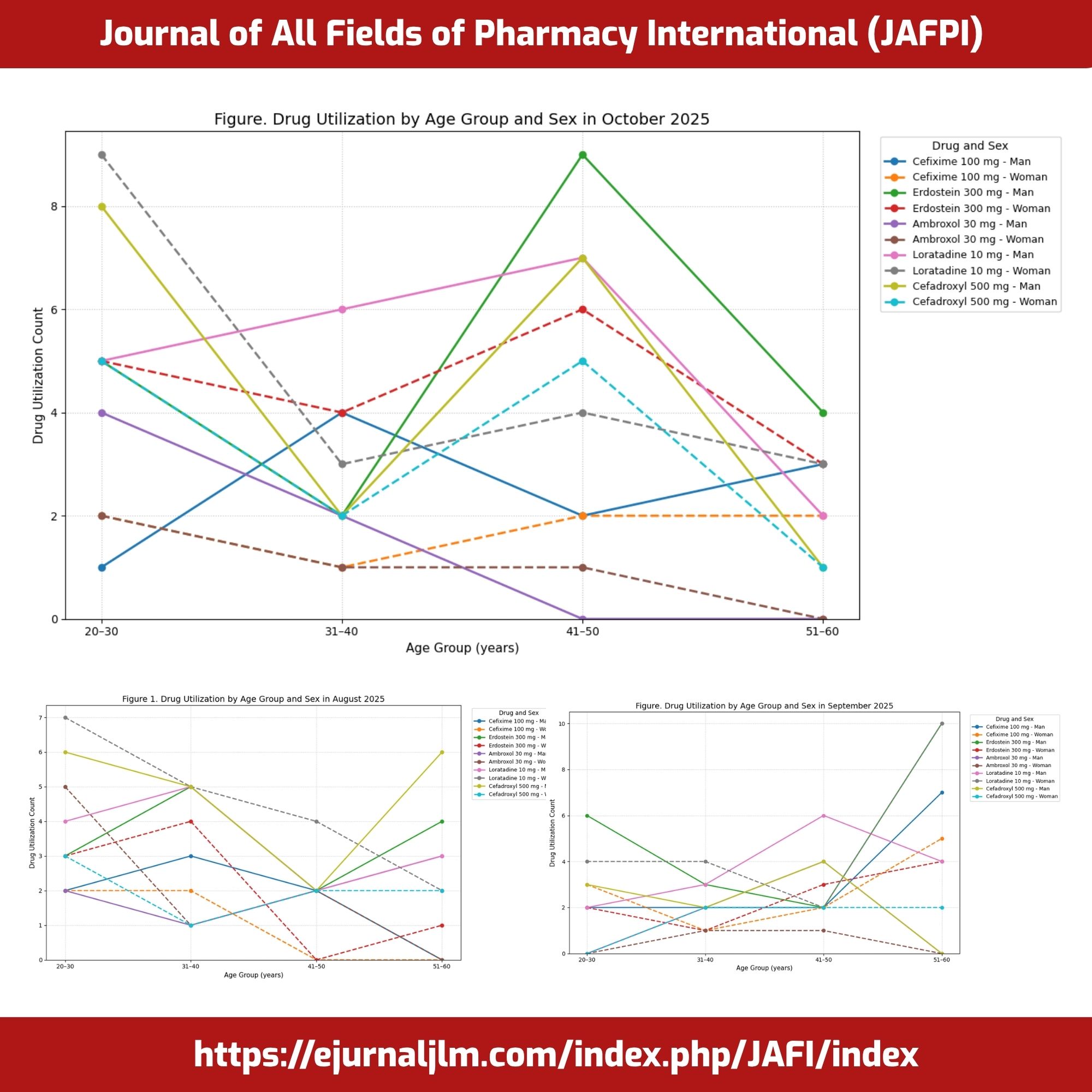
This study aimed to describe the utilization patterns of selected drugs prescribed for upper respiratory tract infection (URTI) cases at a primary health clinic in Gorontalo City, Indonesia, and to assess monthly variations by age group and sex during August–October 2025. A retrospective descriptive design was applied using archived inpatient and outpatient prescription records. Eligible prescriptions included URTI cases containing cefixime 100 mg, cefadroxyl 500 mg, erdosteine 300 mg, ambroxol 30 mg, or loratadine 10 mg. The findings demonstrated clear month-to-month and sex-related variation in prescribing patterns. In August, cefadroxyl 500 mg was the most utilized drug among men (total = 19; mean = 4.75 ± 1.64), whereas loratadine 10 mg was highest among women (total = 18; mean = 4.50 ± 1.80). In September, erdosteine 300 mg ranked first among men (total = 21; mean = 5.25 ± 3.11), while loratadine 10 mg remained the most utilized among women (total = 20; mean = 5.00 ± 3.35). In October, erdosteine 300 mg and loratadine 10 mg were jointly highest among men (total = 20 each; mean = 5.00 ± 2.87 and 5.00 ± 2.16, respectively), while loratadine 10 mg continued to predominate among women (total = 19; mean = 4.75 ± 2.87). Ambroxol generally showed the lowest utilization in several subgroups, and utilization patterns shifted across age categories over time. Overall, these findings indicate that drug utilization varied by sex, age group, and month, underscoring the importance of periodic prescribing review to support rational and evidence-based URTI management in primary care.
Downloads
Published
Issue
Section
License
Copyright (c) 2026 Journal of All Fields of Pharmacy International

This work is licensed under a Creative Commons Attribution 4.0 International License.